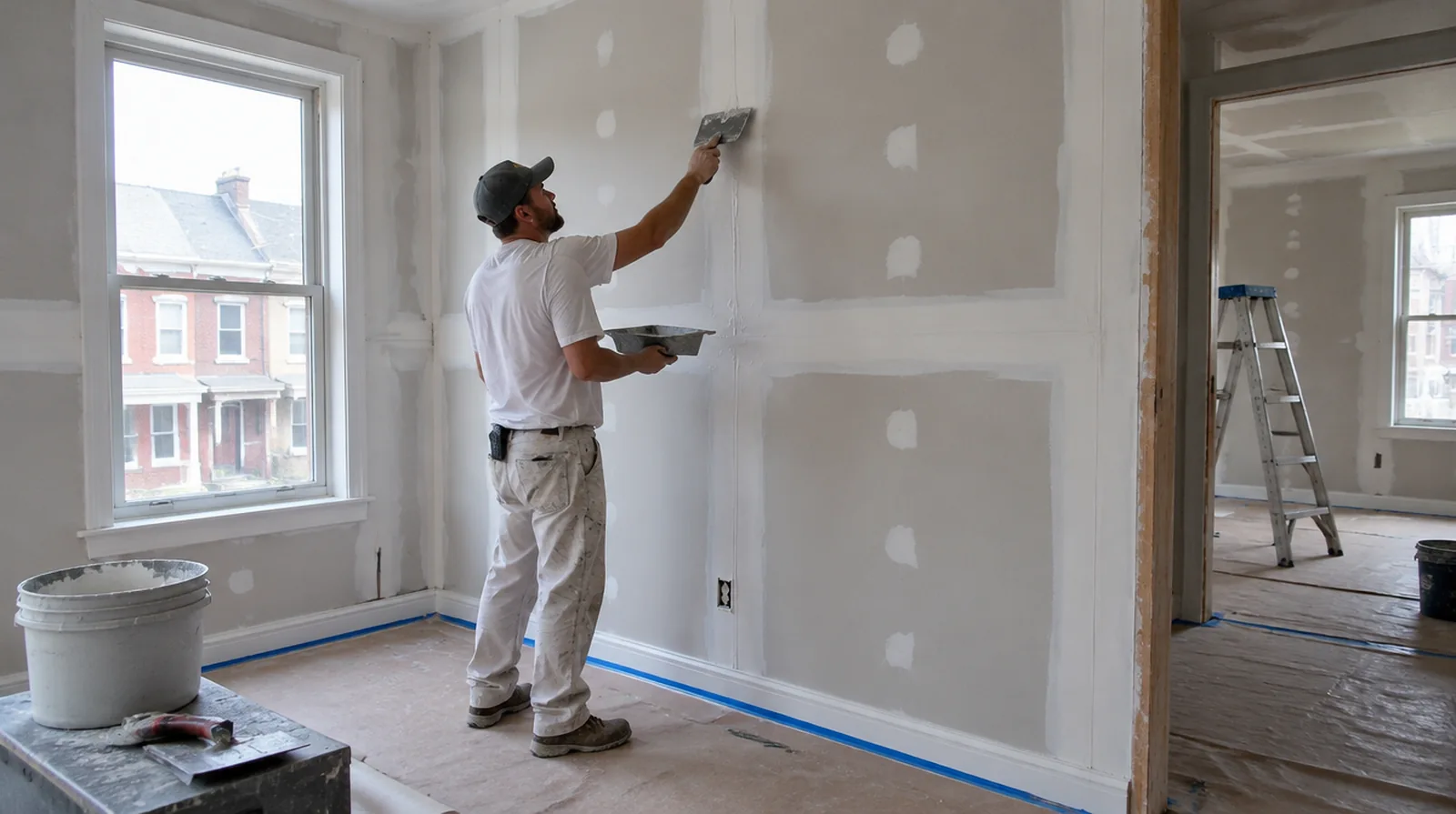
Party walls and sound between neighbors
Shared brick party walls mean the wall you are repairing is also part of a neighbor's home. Fastening into masonry, cutting into an old chase or adding a sound layer all need more thought than in a detached house. Hammering and sanding carry through the shared wall, so agreeing on reasonable working hours keeps the peace. If insulation or a resilient channel is part of the plan, the assembly should be chosen before the old plaster comes down.
Reading row houses and their walls
Reading grew as an industrial city on the Schuylkill River, and much of its housing is brick row homes built between the 1880s and the 1920s. Neighborhoods such as Centre Park, Callowhill and the blocks around Penn Street are full of three-story rows with plaster on wood or metal lath. Many have been partly updated with board over the decades, so a single room might combine original plaster, a 1970s patch and newer drywall around a bathroom.
Cold winters, steam heat and humid summers
Berks County winters are cold and many older rows still run on radiators or a converted boiler. Dry winter heat can open cracks along old plaster keys, while humid summers slow compound drying in a closed back bedroom. A patch made in January may look different by July if the room moves through those swings. Moderate, steady heat and some air movement during finishing are more reliable than a space heater pointed at the wall.
What gets decided up front
If the coating stability is unclear, assess which layers are adequately bonded and which ought to be removed instead of simply hidden beneath new material.
If the existing finish is unusual, keep a small reference sample or a close photograph to support the discussion about blending and restoration.
Review ceiling condition
A textured ceiling can hide old repairs and seams that were never prepared for a smooth appearance. Allow for assessment and further finishing after safe removal exposes the original face.
Inspect supporting framing
An uneven support plane can remain apparent after new gypsum panels are attached. Deal with significant framing irregularities while the structure is exposed, before the boards conceal it.
Separate fixtures from board work
Handling lights, sprinkler fittings and air grilles can require appropriate trades and building coordination. Assign removal and reinstatement responsibilities for any fitting that blocks safe repair access.
Record the completed scope
Keep notes on the source correction, removed materials and any drying verification supplied by other professionals. This record helps explain what the drywall repair covered and what maintenance remains the property owner responsibility.
Consider a skim layer
Broad grazing light can reveal a difference in texture between the paper face and finished joints. Where the finish specification requires greater uniformity, consider an appropriate broad skim application.
Identify the noise path
Determine whether the main concern is airborne speech or vibration through the building structure. Different transmission paths call for distinct assessments before a wall treatment is selected.
About the illustrations
The website images are generated examples of drywall interiors and methods, not photographs of completed customer work. No customer reviews or qualifications are implied. The project form and the telephone shown on this page connect you with the next project conversation.
Explore the drywall services or view the address and map.
More planning details for Reading
Many Reading row homes still have plaster on lath, so a board patch needs to be shimmed flush with the older surface. Radiator heat in winter can dry an old plaster wall enough to reopen hairline cracks along the ceiling line. Original picture rail and plaster crown in older rows should be protected before any cutting begins.