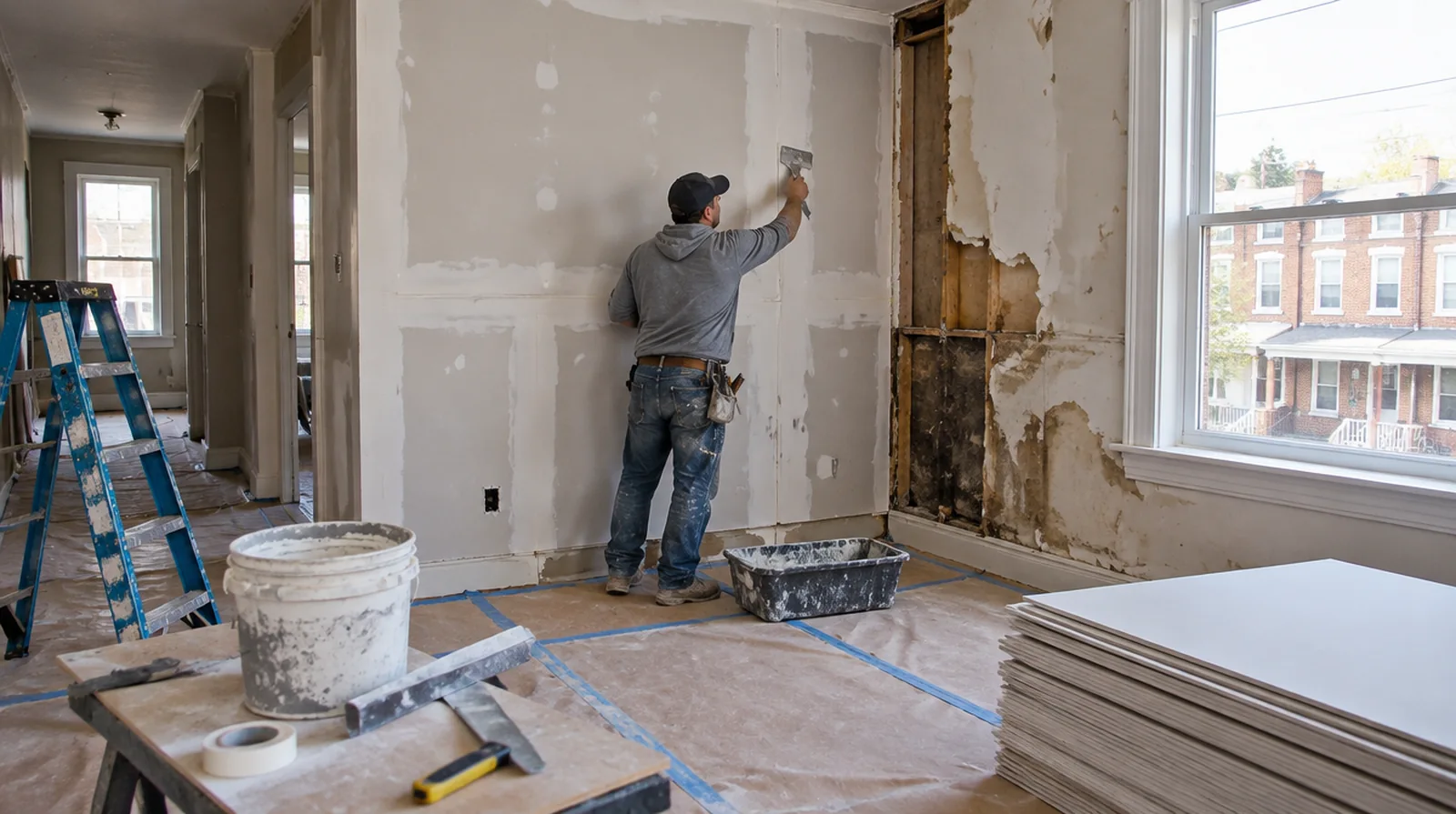
Record the completed scope
Keep notes on the source correction, removed materials and any drying verification supplied by other professionals. That documentation distinguishes the completed drywall scope from continuing upkeep and responsibilities elsewhere in the property. For an initial assessment from pictures, provide an overall room photograph and a detailed view of the defect so both context and scale are apparent.
Keep contamination separate
Flood water and suspected microbial growth require evaluation beyond ordinary cosmetic patching. Ask an suitable remediation professional about containment and material handling before drywall work is scheduled. For a limited patch requiring substantial setup, assess the complete package of access and protection rather than relating cost only to the opening size.
Define selective removal
Removing a controlled section provides access for assessment while preserving material that remains sound. Choose its edge to allow supported replacement and a surface transition that can be blended effectively. For a surface carrying numerous paint layers, discuss whether differences in the retained profile or sheen justify decorating a broader area.
Match the board assembly
Replacement board should suit the original thickness and any applicable wall or ceiling assembly requirements. Changing to a moisture resistant board does not excuse leaving the original water problem unresolved. If occupancy must resume on a certain day, include the later primer and paint stages in the timetable as well as drywall installation and finishing.
Verify drying readiness
A dry looking outer face does not prove that concealed framing and insulation are ready to enclose. The project should identify who verifies the cavity is ready before replacement panels close it again. If materials must cross common building areas, plan the protection and access route so other occupants are not needlessly obstructed by deliveries.
Agree on decorative boundaries
Repairing the damaged board and restoring a uniform paint finish are related but distinct tasks. A ceiling or wall repaint may have to extend beyond the removed section to look consistent. If the ceiling or wall includes fittings, identify the person responsible for removing and reinstalling each item before the work begins.
Treat remaining discoloration
An old dry mark may bleed through new decoration unless an appropriate primer is selected. Verify that the stain is inactive before choosing a coating system for the repaired surface. For a project with several trades, agree which inspection or handover point must happen before the next person starts work.
Inspect concealed components
Other components revealed by removal could need attention that is not included in panel replacement. Those decisions should be resolved before the drywall portion of the repair moves forward. For a limited patch requiring substantial setup, assess the complete package of access and protection rather than relating cost only to the opening size.
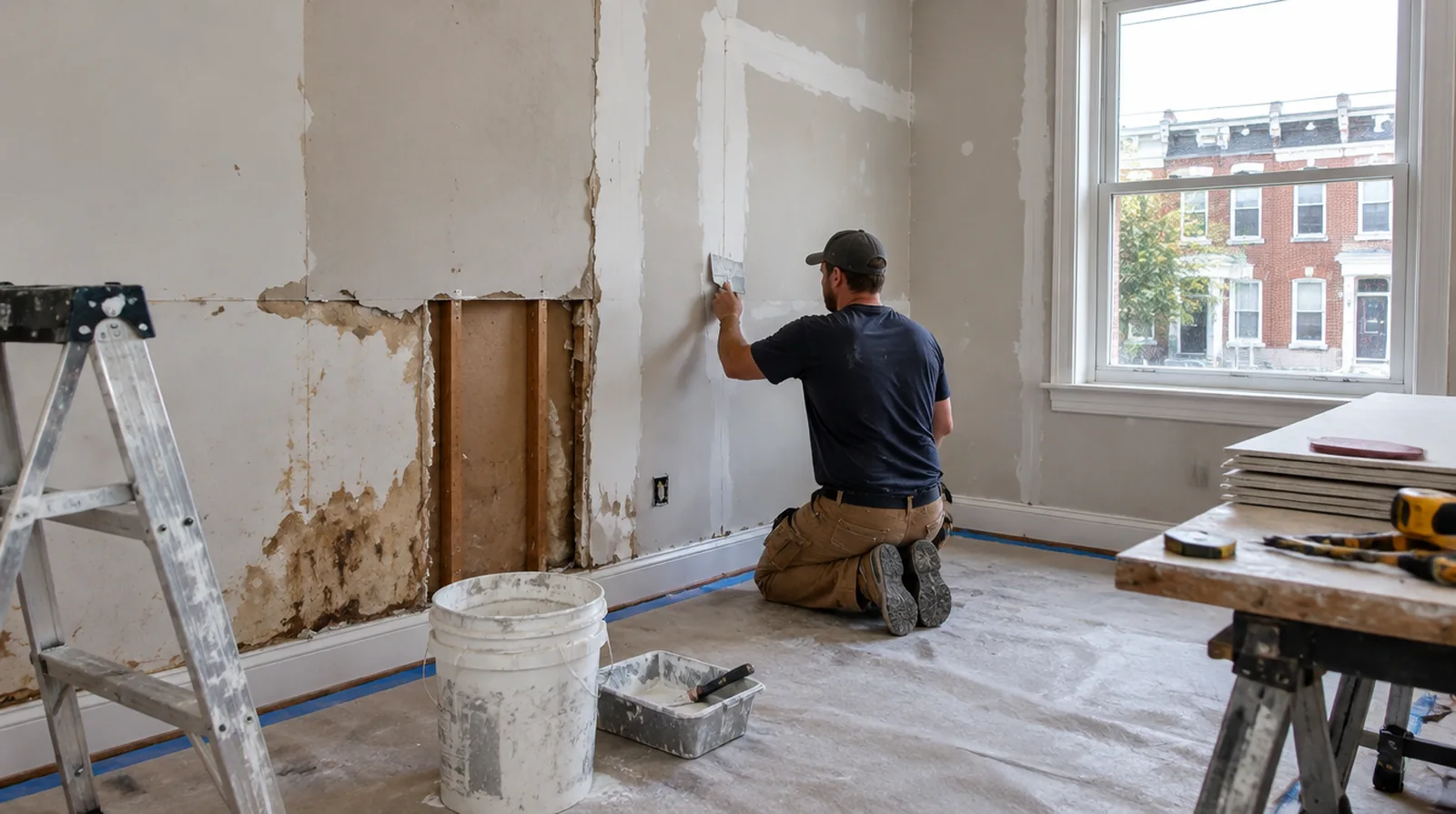
Rebuild supported edges
The new board section must connect firmly to suitable backing or sound framing. A stable repair perimeter helps avoid later cracking where replacement board meets the original surface. When a quote includes multiple visits, ask what happens during each stage and when the interior needs to remain undisturbed between coats.
Finish after moisture control
Apply joint treatment to sound, sufficiently dry materials after the moisture issue has been addressed. Give each finishing layer time to dry rather than trapping dampness under additional material. If the wall work belongs to a broader renovation, coordinate its order with flooring, cabinetry and trim instead of scheduling finishing in isolation.
Project context in Reading
Narrow front doors and turning stairs in Reading rows may call for shorter sheets and a few extra joints. Many Reading row homes still have plaster on lath, so a board patch needs to be shimmed flush with the older surface.
Scope questions before finishing
For a project involving a building manager, confirm access hours and protection requirements before promising a start date or a short completion window.
When more damage could be hidden, ask how any added scope will be documented before extra material is removed or replaced.
At a surface receiving strong window light, review a dried trial from the side in addition to the normal straight view of the wall surface.
If the coating stability is unclear, assess which layers are adequately bonded and which should be removed rather than simply hidden beneath new material.
When concealed damage is possible, establish how additional findings and any proposed removal will be recorded before the scope changes.
If the project is part of a larger remodel, settle the sequence with flooring, trim and cabinet work before setting a final finishing date.
For a surface that will receive wall covering, share the product requirements early so the finishing stage supports the planned decorative treatment.
If occupancy must resume on a certain day, include the later primer and paint stages in the timetable as well as drywall installation and finishing.
Before comparing two proposals, check that both include the same protection, finishing and cleanup boundaries rather than comparing totals alone.
Where a finished perimeter is prominent, decide whether trim stays in position or is removed before agreeing how the new surface meets that edge.
For a room that stays in use, set a workable boundary around construction while retaining the access people need for normal daily activities.
When the project space includes a doorway, check the clearance for panel movement as well as the amount of space available for finishing tools.
Explore the Reading drywall overview for related options, or read the project planning information before arranging the next stage.
More planning details for Reading
Blending new board into old plaster usually means a wider skim feathered well beyond the repair outline. Painting the full wall from corner to corner hides the change between old plaster and new board more effectively. Street parking near Reading row houses is limited on weekdays, so material delivery should be planned in advance.