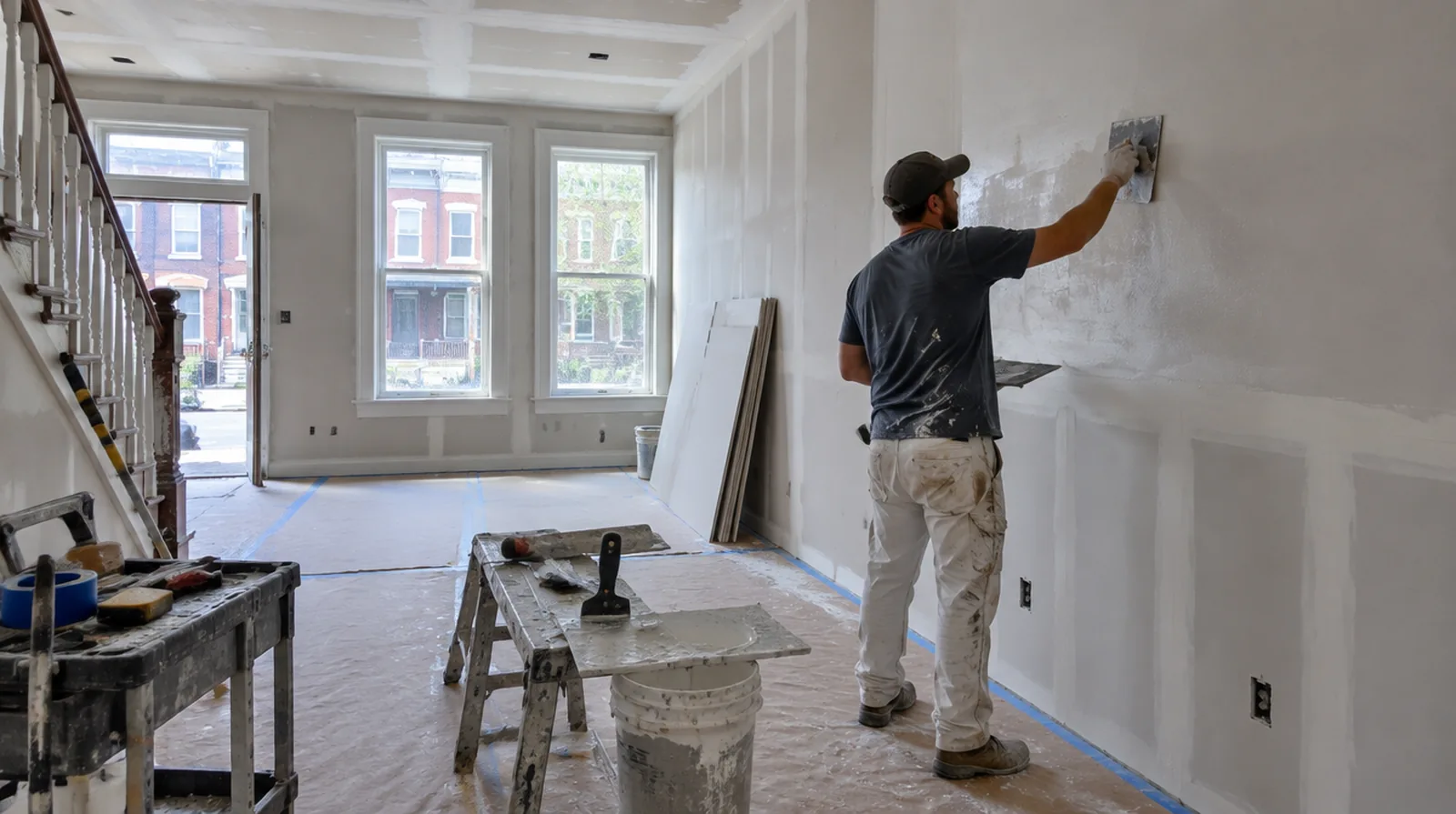
Refine with minimal sanding
Good application reduces the amount of sanding needed to achieve a uniform finish. Dust control should still be planned because broad wall work can create fine airborne particles. If a household member is sensitive to dust, discuss containment and cleaning expectations before choosing how to stage the room work.
Work around trim carefully
Baseboards, frames and fixed fittings create edges that need neat transitions and protection. Discuss whether removing trim is worthwhile or whether the finish will stop cleanly against it. If there is a fixed move in date, reserve sufficient time for the coating stages after drywall work rather than counting only the installation period.
Stabilize torn paper
Wet finishing material can lift damaged paper if the exposed area has not been suitably prepared. Damaged spots need an appropriate sealing approach before the broad finishing coats are applied. If the original finish is unusual, keep a small reference sample or a close photograph to support the discussion about blending and restoration.
Define the smoothing target
Flattening a light texture is distinct from correcting deep waves across an entire wall. Describe the expected improvement and any retained wall variation in the agreed finish scope. For a planned new wall mounted fixture, resolve its backing requirements while the cavity remains open instead of cutting into completed drywall later.
Apply controlled thin layers
A skim coat is intended to refine the surface rather than build a heavy unsupported layer. More than one pass may be necessary where the original texture creates deeper low points. Where a surface has been painted many times, consider whether differences in texture or sheen will require a wider decorative treatment.
Clean and prepare the wall
Adhesion can be compromised by dirt, oil or residues left on the old coating. Select cleaning and any necessary bonding preparation according to the actual surface condition. When comparing competing estimates, make sure their protection, surface finish and disposal allowances describe equivalent work before comparing the final prices.
Assess the existing coating
Loose paint and unstable layers need attention before a thin skim can bond reliably. Separate peeling or poorly bonded material from a stable wall that merely needs smoothing. At a ceiling or wall containing fittings, assign removal and reinstatement duties for the affected devices before repair access is needed.
Let each coat dry
Room temperature, humidity and airflow influence drying interval across a broad coated surface. A rushed next coat can drag or disturb material that has not set up sufficiently. When photographs are used for an initial discussion, include a wide room view as well as a close view so scale and surrounding finishes are understandable.
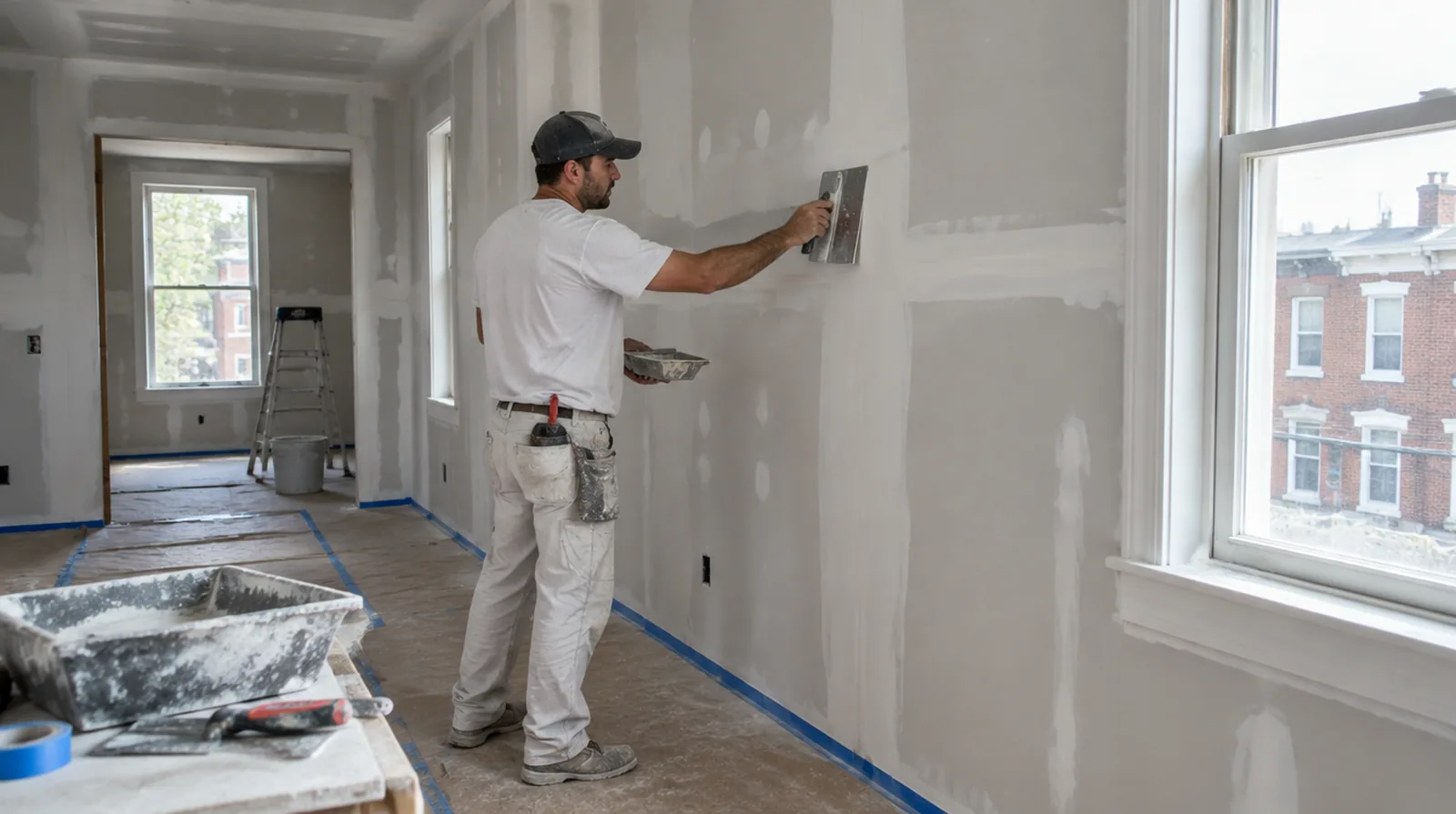
Inspect using side light
Check the dried surface with light crossing it as well as light facing it directly. The review should reflect the conditions that will matter when the interior returns to everyday use. When panel replacement exposes a cavity, resolve any required inspection before that opening is closed and the surface finishing begins.
Prime before decoration
Fresh skim compound needs an appropriate primer before the finish paint is applied. Priming equalizes absorption and may help identify small corrections before the last paint coat is applied. For a planned new wall mounted fixture, resolve its backing requirements while the cavity remains open instead of cutting into completed drywall later.
Project context in Reading
Original picture rail and plaster crown in older rows should be protected before any cutting begins. Shared brick party walls carry noise to the neighbor, which makes agreed working hours part of a Reading project plan.
Scope questions before finishing
At the handover inspection, review the finish from ordinary room positions using the lighting conditions that were agreed for the work.
When more damage could be hidden, ask how any added scope will be documented before extra material is removed or replaced.
If materials must cross common building areas, plan the protection and access route so other occupants are not needlessly obstructed by deliveries.
If the existing finish is unusual, keep a small reference sample or a close photograph to support the discussion about blending and restoration.
If occupancy must resume on a certain day, include the later primer and paint stages in the timetable as well as drywall installation and finishing.
For a room that stays in use, set a workable boundary around construction while retaining the access people need for normal daily activities.
If the completion date matters most, allow for intervals between coats as well as active labor rather than assuming the entire process happens continuously.
For a tightly furnished room, plan temporary storage and the minimum working clearance before material is carried into the property.
Where flooring is staying in place, agree on protective coverings and check that tools and material handling will not damage the noticeable finish.
If the surface condition is uncertain, allow for an assessment that can distinguish stable material from layers that should not be covered.
When a wall has repeated defects, keep a record of earlier repair attempts so a new assessment does not simply repeat an unsuccessful approach.
For a surface carrying numerous paint layers, discuss whether differences in the retained profile or sheen justify decorating a broader area.
Explore the Reading drywall overview for related options, or read the project planning information before arranging the next stage.
More planning details for Reading
Many Reading row homes still have plaster on lath, so a board patch needs to be shimmed flush with the older surface. Narrow front doors and turning stairs in Reading rows may call for shorter sheets and a few extra joints. Blending new board into old plaster usually means a wider skim feathered well beyond the repair outline.