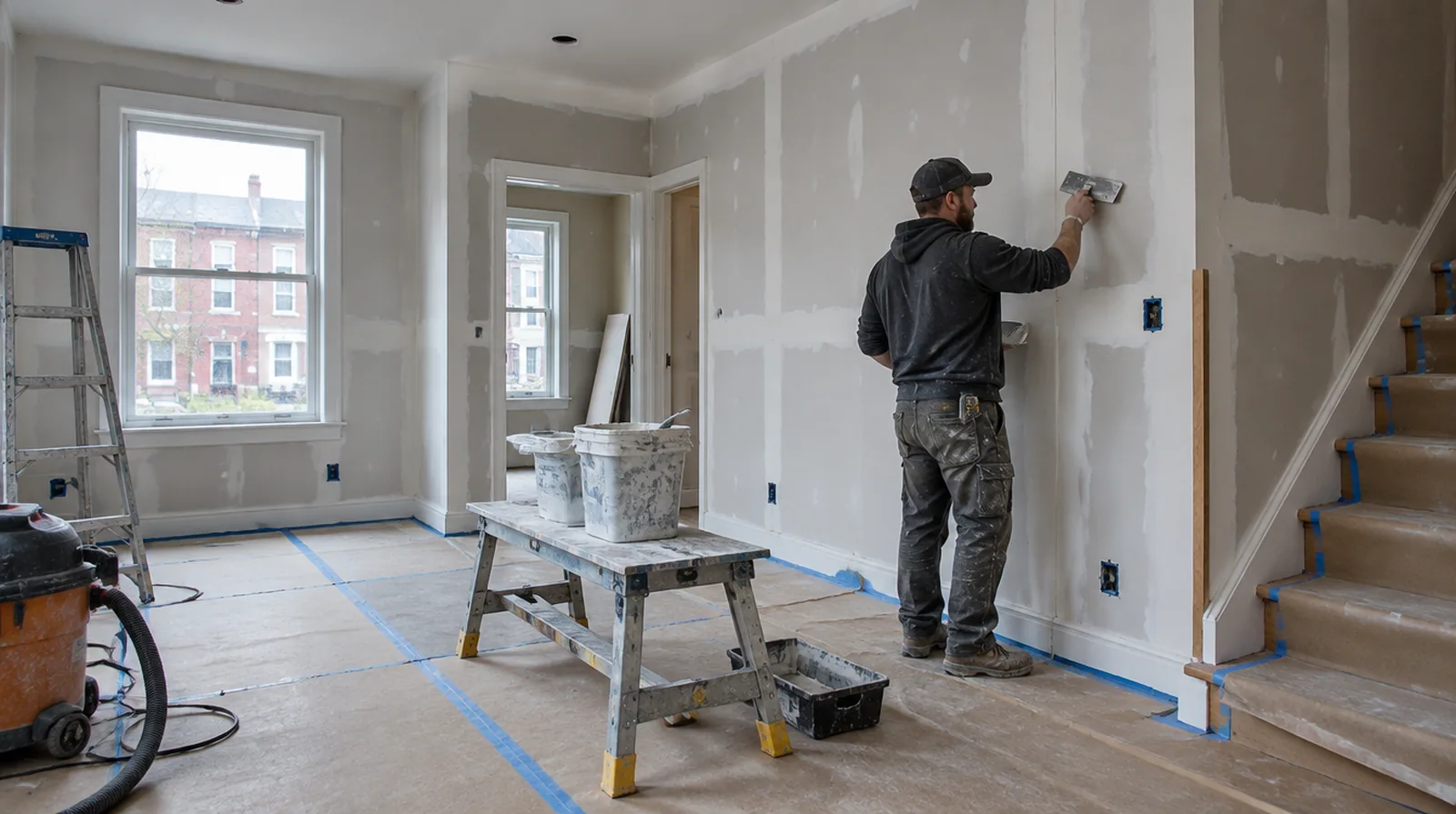
Choose the patch boundary
The repair must reach gypsum and paper that remain intact, instead of stopping at the noticeable outline of the hole. Squaring an opening may create a practical edge for backing and a securely fitted replacement. For a project involving a building manager, confirm access hours and protection requirements before promising a start date or a short completion window.
Document recurring movement
Cracks that return after cosmetic repairs deserve a conversation about movement or moisture rather than another quick cover. A drywall estimate should state when another trade needs to investigate before surface work proceeds. When the history of a repair is uncertain, note when it became visible and whether its appearance has altered across differing seasons.
Feather beyond the opening
The visible finishing area usually extends farther than the hole because a gradual taper hides the repair edge. A broad blend reduces the ridge that otherwise appears when light travels across the wall. Before comparing two proposals, check that both include the same protection, finishing and cleanup boundaries instead of comparing totals alone.
Prepare for primer
Fresh compound and existing painted drywall absorb coatings differently unless the repair receives suitable primer. Establish whether suitable primer is part of the repair or will be applied by another contractor. When the wall has strong reflected light, look at the full plane instead of judging only the narrow strip immediately beside the patch.
Build thin finishing coats
Several controlled applications are generally easier to flatten than one deep deposit of drywall joint compound. Each layer needs adequate time needed for drying before the next pass can be judged accurately. When the history of a repair is uncertain, note when it became visible and whether its appearance has altered across different seasons.
Identify the cause
Damage from an impact is not assessed in the same way as a seam that keeps splitting at a door opening. Check whether the wall feels firm and whether the defect has changed since it first appeared. If the project is part of a larger remodel, settle the sequence with flooring, trim and cabinet work before setting a final finishing date.
Reinforce panel seams
Joint tape bridges the transition between the original wall and a replacement section. Embed the chosen tape fully in its intended compound so the edges bond without bubbles. When the wall surface has strong reflected light, look at the full plane rather than judging only the narrow strip immediately beside the patch.
Review with side lighting
Use an angled view as well as a direct view when reviewing a finished patch. Checking from more than one angle helps separate surface imperfections from differences in coating sheen. Where light reflects along the wall surface, inspect the complete plane instead of limiting the review to the edge immediately next to the repaired section.
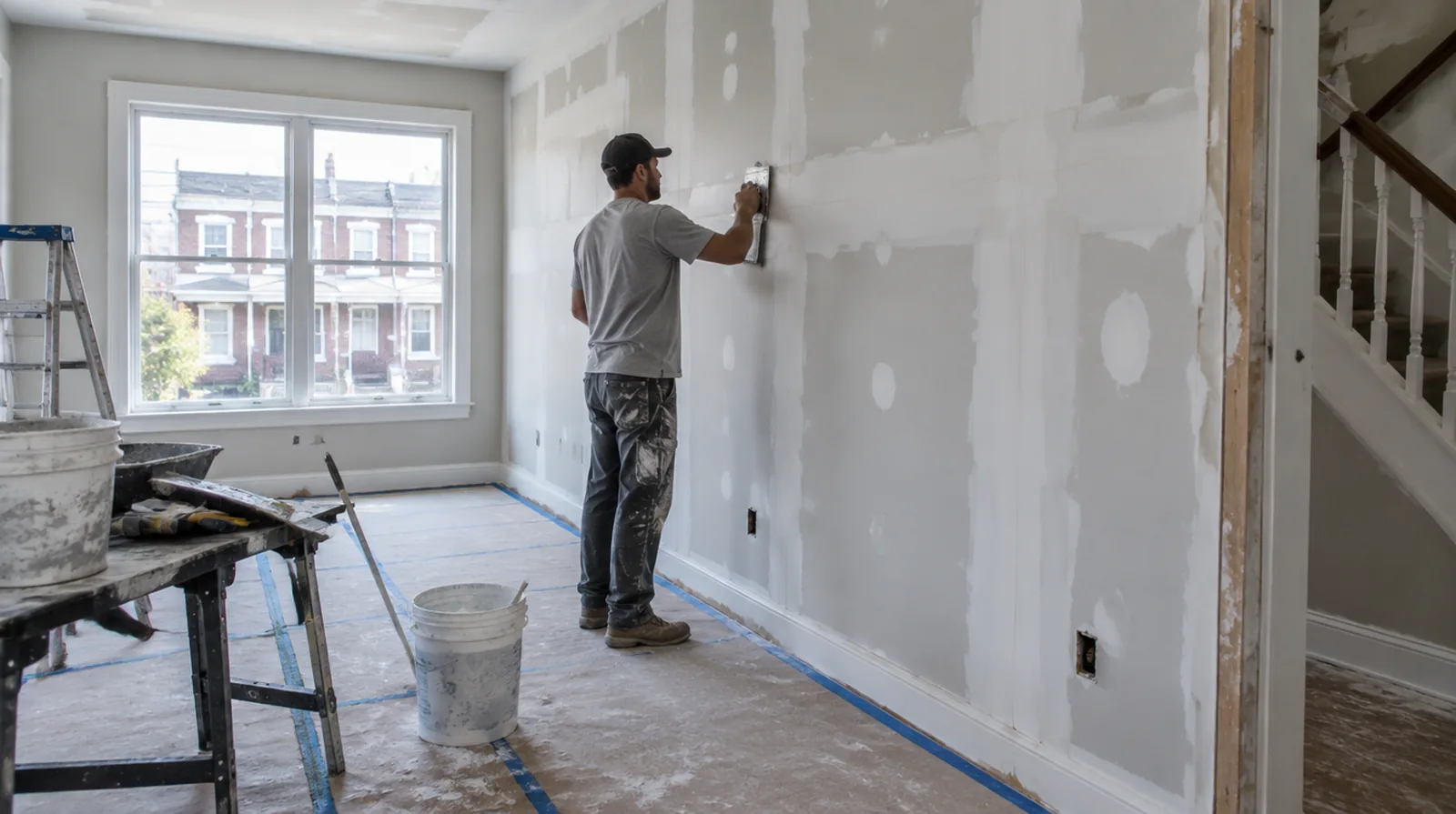
Support the replacement
Larger openings need a fitted board patch secured to framing or suitable backing rather than a thick mound of compound. The replacement panel thickness should match the original face so the joint can finish level. If the current finish is unusual, keep a small reference sample or a close photograph to support the discussion about blending and restoration.
Protect adjacent surfaces
Small wall repairs can still distribute fine dust through the room if protection is inadequate. Identify the possessions to move and agree which adjacent spaces need to stay usable. If the final paint is already chosen, share its sheen and color early because those choices influence how surface preparation is judged.
Project context in Reading
Narrow front doors and turning stairs in Reading rows may call for shorter sheets and a few extra joints. Blending new board into old plaster usually means a wider skim feathered well beyond the repair outline.
Scope questions before finishing
When the history of a repair is uncertain, note when it became visible and whether its appearance has altered across different seasons.
For a surface that will receive wall covering, share the product requirements early so the finishing stage supports the planned decorative treatment.
If the coating stability is unclear, assess which layers are adequately bonded and which ought to be removed rather than simply hidden beneath new material.
For a distinctive existing pattern, retain a reference sample or detailed picture to make the matching discussion more specific.
For a repair that crosses several surfaces, measure the affected planes separately so the estimate can explain where each finishing treatment starts and stops.
For a project involving a building manager, confirm access hours and protection requirements before promising a start date or a short completion window.
When the same defect has returned, share information about previous repair methods so the next assessment can consider why they did not last.
If scheduling is the main concern, separate hands on labor from drying intervals instead of treating every visit as a full day of active work.
For a wall receiving a decorative covering, provide its preparation requirements early adequate for the drywall finish to support that product.
If the proposal requires return visits, identify the purpose of each stage and the intervals during which finishing material needs to remain undisturbed.
If the surface condition is uncertain, allow for an assessment that can distinguish stable material from layers that should not be covered.
If the current finish is unusual, keep a small reference sample or a close photograph to support the discussion about blending and restoration.
Explore the Reading drywall overview for related options, or read the project planning information before arranging the next stage.
More planning details for Reading
Shared brick party walls carry noise to the neighbor, which makes agreed working hours part of a Reading project plan. Many Reading row homes still have plaster on lath, so a board patch needs to be shimmed flush with the older surface. Street parking near Reading row houses is limited on weekdays, so material delivery should be planned in advance.