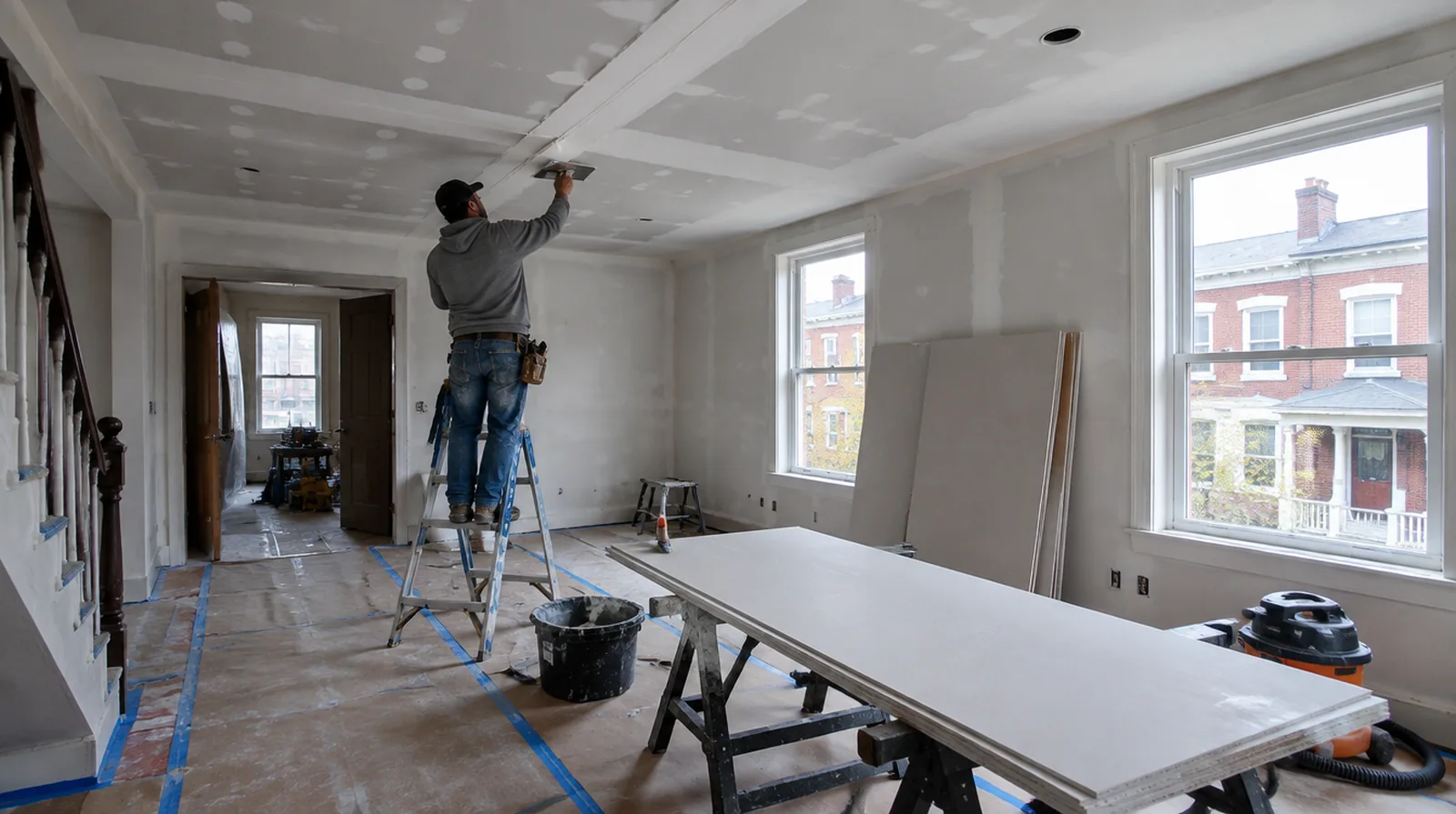
Plan overhead access
Ceiling height and furniture layout influence the platform and protection needed for safe working access. Large fixtures and delicate flooring can affect setup time more than the size of the damaged spot. When the history of a repair is uncertain, note when it became visible and whether its appearance has altered across different seasons.
Identify the existing surface
A ceiling may contain gypsum board, plaster or several layers from earlier renovations. The right repair depends on that actual construction instead of the color of its painted face. If the problem developed after another renovation, explain which nearby materials or building systems changed before the damage became visible.
Set the repainting scope
Fresh paint over a local patch may contrast with a ceiling that has aged over time. Painting to a natural boundary may be preferable to touching up only the repair. For a tightly furnished room, plan temporary storage and the minimum working clearance before material is carried into the property.
Add reliable backing
Support a ceiling replacement mechanically at its perimeter instead of using finishing compound as a structural attachment. Fit compatible board thickness so the old and new faces meet without an unneeded step. When the work area includes a doorway, check the clearance for panel movement as well as the amount of space available for finishing tools.
Separate fixtures from board work
Electrical fittings, sprinkler components and mechanical grilles can involve other trades or building approvals. Clarify who disconnects and reinstalls anything that interferes with access to the damaged area. When the decorative coating has been selected, tell the finisher its intended sheen and color while the surface preparation standard is still being agreed.
Cut back to sound material
A reliable replacement cannot depend on board that has lost strength through water exposure. The removal boundary should reach stable material and allow the replacement to be properly supported. If occupancy must resume on a certain day, include the later primer and paint stages in the timetable as well as drywall installation and finishing.
Evaluate sagging sections
A sagging ceiling needs its supports, fixings and damaged materials assessed, not simply smoothed. Keep people away from an unstable area while the appropriate professional evaluates it. At a repair beside an opening, allow clearance for moving board through the doorway and space to use the finishing tools effectively.
Review the room after drying
Once the coats are dry, view the ceiling from normal room positions and near its principal windows. Record any remaining paint preparation before the protection comes down and the interior returns to use. When reviewing the finished work, use the agreed lighting and natural room viewpoints so the assessment reflects the intended use of the space.
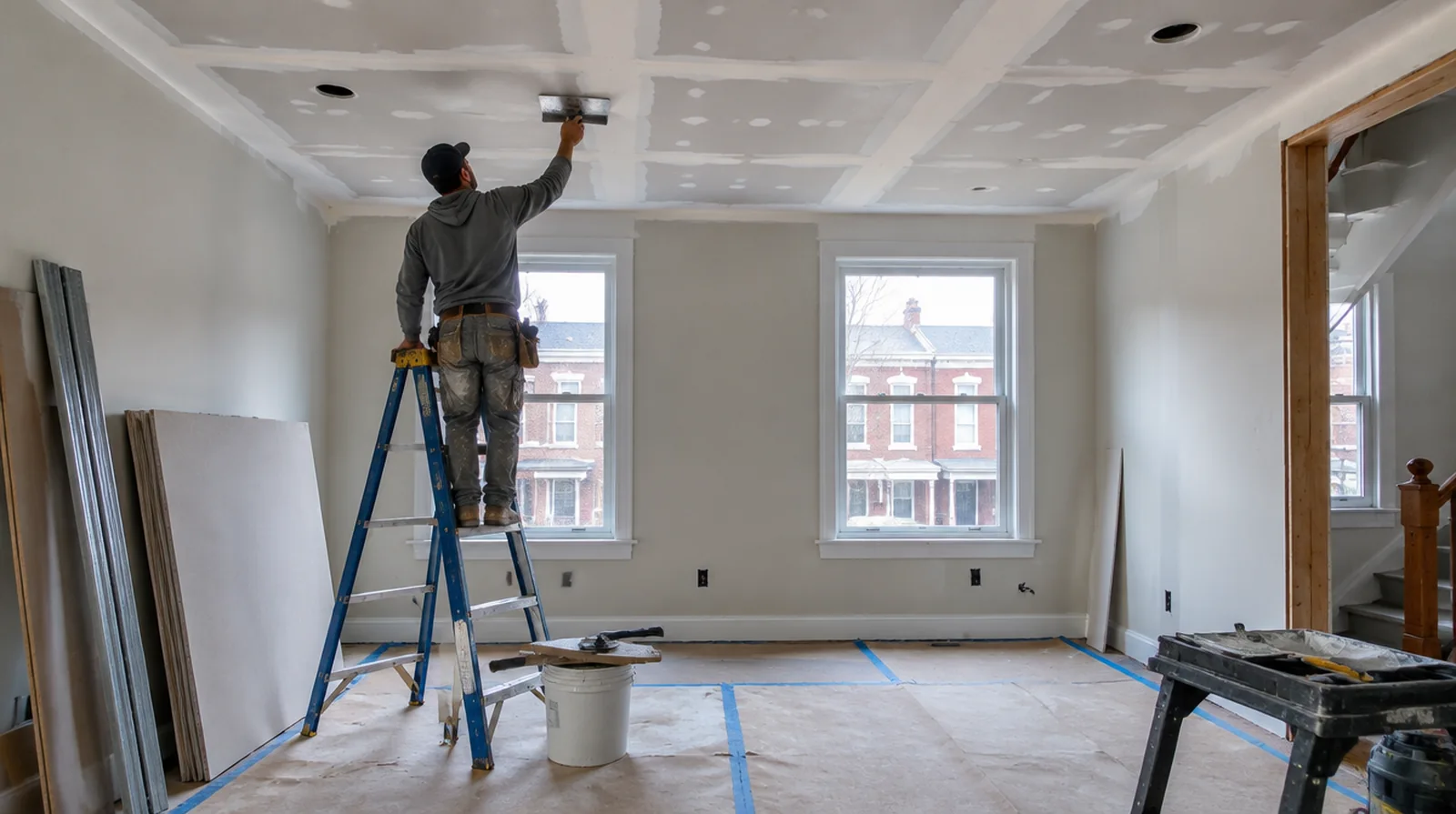
Check the source of damage
A visible overhead mark may be evidence of a problem in a service or space above the interior. The cause needs resolution before cosmetic repair can reasonably be expected to last. If the interior will remain occupied, identify a practical separation between the work area and the space that still needs daily access.
Address isolated stains
Inactive discoloration may require a primer selected to block the remaining stain. Establish that the source is no longer active instead of treating primer as a remedy for damp material. Where flooring is staying in place, agree on protective coverings and check that tools and material handling will not damage the visible finish.
Project context in Reading
Shared brick party walls carry noise to the neighbor, which makes agreed working hours part of a Reading project plan. Blending new board into old plaster usually means a wider skim feathered well beyond the repair outline.
Scope questions before finishing
If materials must cross common building areas, plan the protection and access route so other occupants are not needlessly obstructed by deliveries.
For a project with several trades, agree which inspection or handover point must happen before the next person starts work.
At an edge beside built in furniture, state whether the obstruction will be removed or whether finishing stops at the section that can be reached.
If the proposal requires return visits, identify the purpose of each stage and the intervals during which finishing material needs to remain undisturbed.
When a quote includes multiple visits, ask what happens during each stage and when the room needs to remain undisturbed between coats.
If the final paint is already chosen, share its sheen and color early because those choices influence how preparation of the surface is judged.
If the current finish is unusual, keep a small reference sample or a close photograph to support the discussion about blending and restoration.
If the surface condition is uncertain, allow for an assessment that can distinguish stable material from layers that should never be covered.
Where a future fixture will be installed, coordinate any required backing while the cavity is accessible rather than reopening the completed wall.
Before comparing two proposals, check that both include the same protection, finishing and cleanup boundaries instead of comparing totals alone.
When the project space includes a doorway, check the clearance for panel movement as well as the amount of space available for finishing tools.
Where light reflects along the wall surface, inspect the complete plane instead of limiting the review to the edge immediately next to the repaired section.
Explore the Reading drywall overview for related options, or read the project planning information before arranging the next stage.
More planning details for Reading
Narrow front doors and turning stairs in Reading rows may call for shorter sheets and a few extra joints. Humid Berks County summers slow drying in a closed back bedroom, so air movement between coats helps. Painting the full wall from corner to corner hides the change between old plaster and new board more effectively.